
How water accumulates on runways and how we can reduce runway interventions?
Heavy rain can change runway conditions within minutes. Water may collect in one part of a runway while another part remains relatively clear. For airport operators, the challenge is to understand those differences quickly enough to support safe decisions about takeoffs and landings.
Checking water depth on the runway provides valuable information, but a physical inspection requires access to an active runway. At a busy airport, that can interrupt traffic and leave aircraft waiting. As conditions continue to change, the airport may soon need another assessment.
Moventor has developed a prototype that explores a faster way to assess water accumulation. The approach combines rainfall data with information about the runway surface to estimate how water depth develops in different areas. The aim is to give airport teams a clearer, more timely view of where standing water may form.
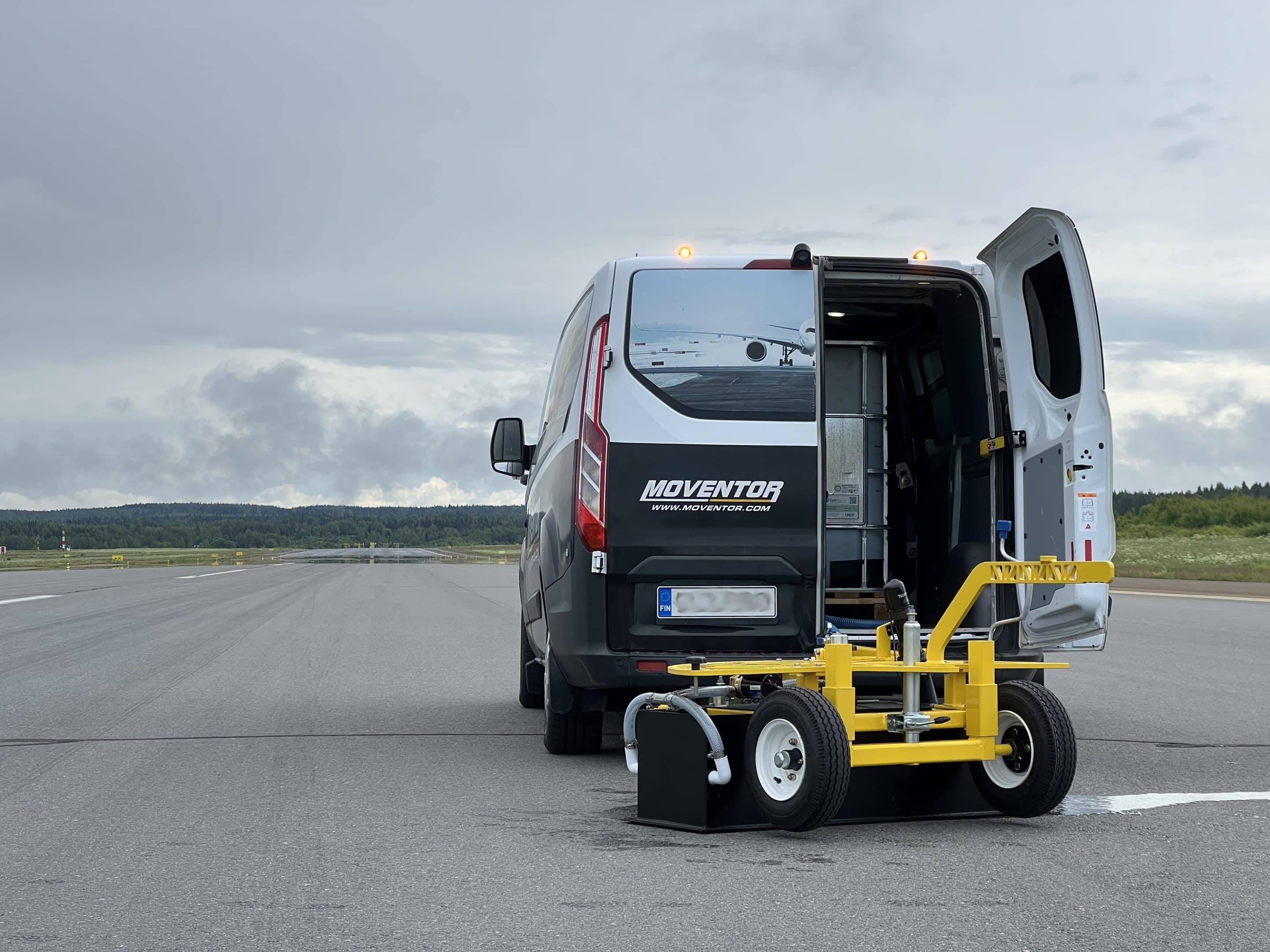
Safety comes always first in aviation. Better information about changing runway conditions can help operators identify areas that need attention and provide relevant information for operational decisions. The prototype is intended to support established assessment procedures; further testing and validation are needed before it can be used as an operational product.
There is also a practical cost benefit. If reliable information helps airports target physical inspections more effectively and avoid unnecessary runway interruptions, aircraft may spend less time waiting on the ground or in the air. The value will depend on each airport’s traffic, weather and operating procedures, so we are continuing to examine the potential savings as the product develops.
Shorter delays also mean less fuel consumed and fewer associated emissions. That is a welcomed benefit of improving how runway conditions are assessed. This will have large positive environmental effect.
The project has given us a prototype and a foundation for further development. Moventor is now continuing the work with its own funding, with the goal of turning the concept into a tested, reliable product for airport operations.